

-
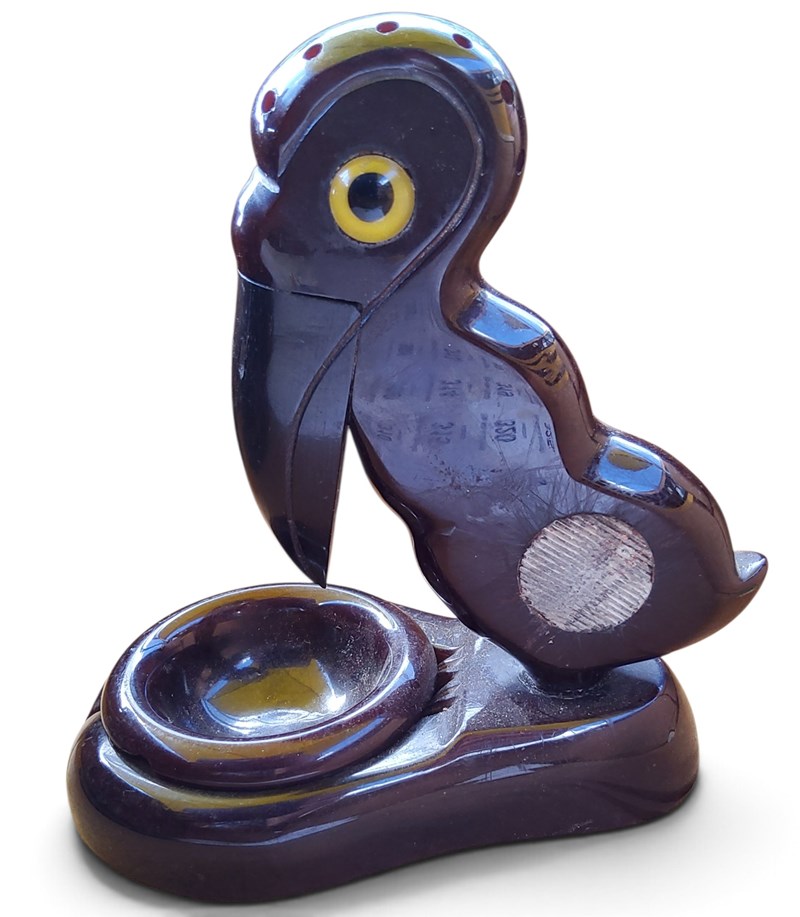
An Art Deco bakelite YZ Bird match holder and ashtray, by Henry Howell & Co for Dunhill sold for £6400 at Ellis Willis and Beckett
Dunhill and Bakelite
When Alfred Dunhill began polishing smoking accessories into true luxury items, Bakelite showed up at just the right moment. Its resistance to heat, its knack for insulating electricity and the way it could be pressed into exact shapes made it perfect for the small, functional yet stylish pieces Dunhill wanted.
Leo Baekeland invented Bakelite in the early 1900s, making it the first synthetic plastic to achieve real market success. As a thermosetting resin, once heated and pressed it would harden forever instead of melting later. This permanence gave it an edge over older plastics and natural substances, especially when manufacturers needed pieces that could endure, stay uniform and be produced in volume. Designers also grabbed onto its fresh look - smooth dark‑glossy surfaces and sharp geometric lines that fit the Art Deco vibe.
Those traits proved priceless for Dunhill’s smoker’s gear. In the 1920s and 1930s the brand became known for sleek lighters, cigarette holders, cases and other fittings. Bakelite served the heat‑exposed, wear‑prone parts and at the same time handed the items a contemporary sheen. Take the Dunhill Torpedo - a graceful cigarette holder tucked inside a Bakelite case that mimics an underwater missile. That piece illustrates how the plastic let Dunhill fuse novelty, usefulness and prestige.
Beyond the shop floor, Bakelite fit the cultural mood Dunhill was courting. In the interwar years, a cigarette holder was more than a utility; it shouted taste, worldliness and a dash of tech‑savvy. Because the plastic was linked to progress, it instantly felt contemporary. Meanwhile its ability to be pressed into dense, polished shapes let Dunhill turn even tiny items into proper luxury pieces instead of throw‑away gadgets.
Manufacturing also made sense. Bakelite could be churned out in uniform shapes and volumes, a boon for brands chasing finesse without sacrificing speed. That was key for Dunhill, a house that prized hand‑craftsmanship yet demanded dependable standards. So Bakelite wasn’t just a stand‑in material - it became a thread in the fabric of modern luxury’s reinvention.
Now, Bakelite endows Dunhill items with a collector’s charm, for aficionados it marks a time when design, chemistry and branding collided in unusually elegant fashion. A Dunhill piece that bears Bakelite is worth noting not just as a smoking tool but as a snapshot of early‑twentieth‑century material culture. It freezes the instant when a fresh synthetic gave luxury goods a look and feel that screamed modern.