

-
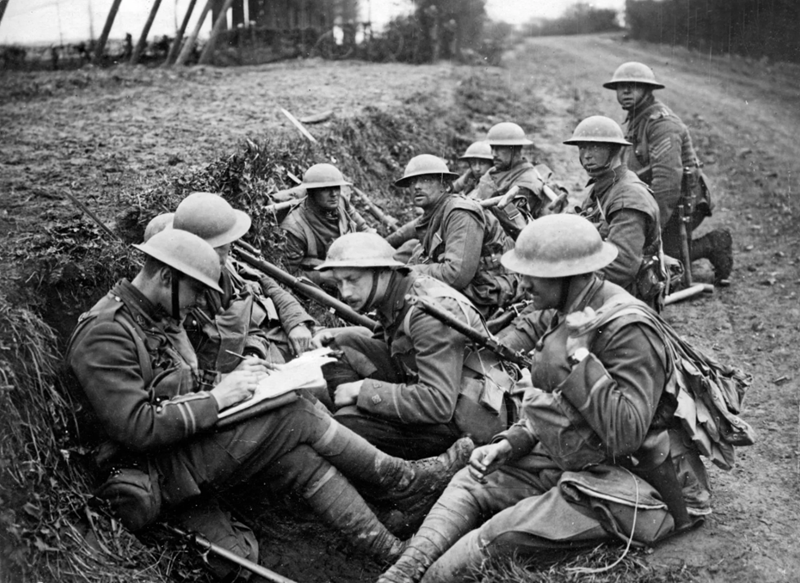
British Troops in WWI
The Ingersoll Midget was a small, cheap American watch that became closely tied to the First World War as one of the early “trench watches.” It was no precision military instrument, but it helped make the wristwatch practical for soldiers whose pocket watches were hard to use in trenches, vehicles, and aircraft.
Origins of the watch
The Midget came from Robert H. Ingersoll & Bro., a firm that Robert and Charles Ingersoll founded in 1881. The company made its name on affordable mass-produced timepieces, above all the one-dollar “Yankee” watch marketed as “The Watch That Made the Dollar Famous.”
Introduced in 1912, it was smaller and thinner than the company’s earlier pocket watches. That compact size suited conversion into a wristwatch: soldered lugs at the top and bottom of the case took a leather strap, and the winding crown sat at three o’clock.
A Wartime “trench watch”
Before 1914, men rarely wore wristwatches; they carried pocket watches. In the trenches, though, reaching into a uniform pocket was inconvenient, especially during an attack, while driving, or when coordinating artillery and infantry movements. Soldiers started strapping watches to their wrists, and manufacturers answered with purpose-made wristwatches.
The Midget fit the need. Cheap, light, and simple, it used a non-jeweled hook-anchor escapement rather than the jeweled movements of higher-grade watches. Examples sold for roughly 90 cents and could come with a protective crystal grille and an early wide wrist strap.
Typical WWI examples had a black dial with white numerals, luminous hands and markers, and a small subsidiary seconds dial at six o’clock. The black dial cut glare and made the watch less conspicuous at night, while radium-based luminous paint let the time be read in darkness.
-
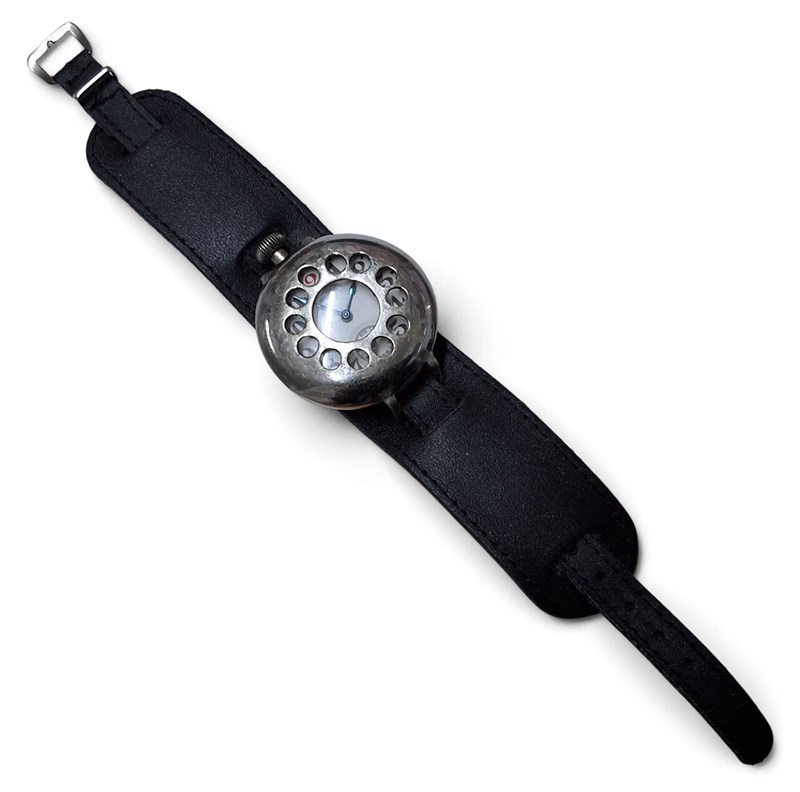
Lot 204 in 20th Oct 2026 Auction
Military Use
The Midget was not an official, high-specification service watch in the modern sense. It was a utilitarian consumer watch that reached military service through private purchase, gifts to men going to the front, and limited issue or requisition for personnel who needed a wrist-worn timepiece. Surviving examples are often described as officer’s trench watches, sometimes fitted with ventilated metal dial guards to protect the glass.
Accounts of the model link it especially with tank crews, drivers, and gunners, for whom checking a pocket watch was impractical. The claim that the U.S. Army required Waterbury Clock to retool the Midget into a wristwatch deserves caution, but it reflects the watch’s strong association with wartime wristwatch adoption.
Its importance lay in scale and timing rather than individual quality. Ingersoll made enormous numbers of inexpensive watches, and the Midget brought wristwatch ownership within reach of ordinary soldiers. Veterans kept wearing them after the war, which helped normalize the wristwatch for civilian men during the 1920s.
Design and Limitations
The Midget’s virtues were affordability and convenience, not durability or accuracy. Its movement was deliberately economical, and many wartime watches were treated as replaceable rather than repairable. Still, its basic layout of strap lugs, crown at three o’clock, legible dial, and optional luminous paint became the template for later military wristwatches.
Original examples can still be identified by the “Ingersoll Midget” dial signature, subsidiary seconds, and serial numbers. Serial-number tables place watches around 42.5 million in 1915 and 45.5 million in 1916, which lets collectors approximate a watch’s production date.
Legacy
The Ingersoll Midget matters in horological history because it captures the moment the wristwatch changed from a largely feminine accessory into standard male equipment. The war created a practical demand for hands-free timekeeping, and inexpensive watches such as the Midget met that demand at scale.
Surviving WWI Midgets are valued today as artifacts of social and technological change more than as fine watchmaking. They show how industrial mass production, battlefield necessity, and changing ideas about masculinity combined to make the wristwatch an everyday object.
-
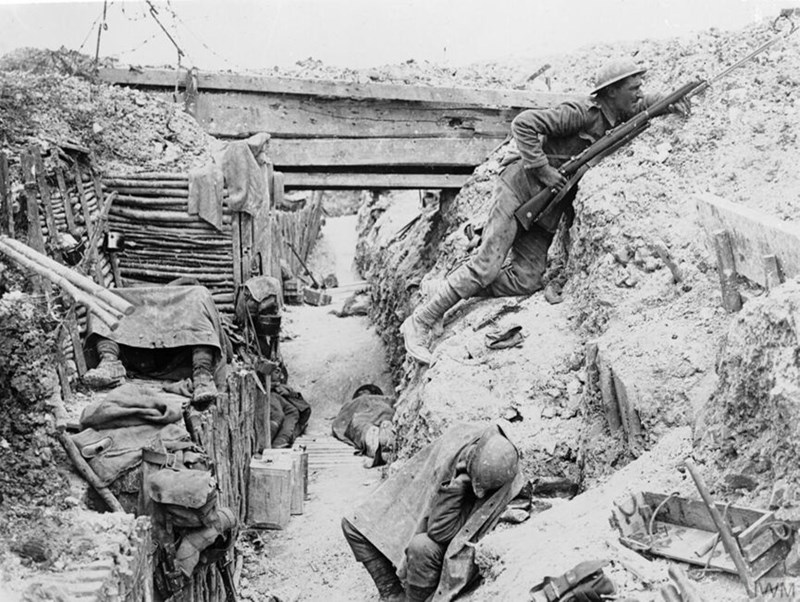
Life in the trenches