

-
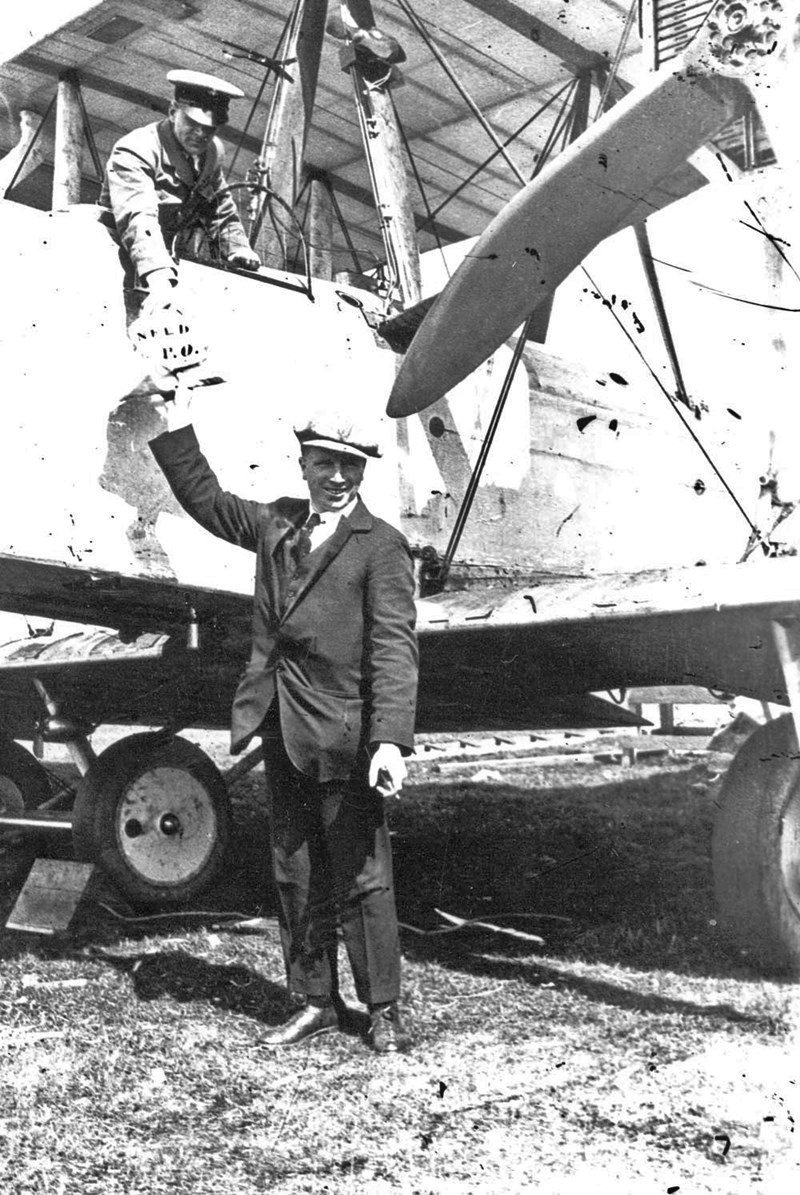
Alcock and Brown
Alcock and Brown 1st Non-Stop Transatlantic Flight
The first non‑stop transatlantic flight
On 14-15 June 1919 British aviators Captain John Alcock and Lieutenant Arthur Whitten Brown wrote their names into the record books. They lifted off in a modified First World War Vickers Vimy bomber from St John’s, Newfoundland and, after battling fog, ice and a host of mechanical quirks, touched down near Clifden in County Galway, Ireland. The distance was roughly 1,890 miles (3,040 km) and the clock read just under 16 hours when the aircraft finally gave way to a bog.
Background and the Daily Mail prize
The stunt was part of a post‑war surge to prove that long‑distance air travel could work. Back in 1913 the Daily Mail had dangled a £10,000 reward for the first nonstop Atlantic crossing, a challenge paused for the war and then revived. Many teams entered the race, yet it was Alcock and Brown, flying for Vickers, who claimed the prize. Their machine - a Vickers Vimy F.B.27A Mk.IV twin‑engine biplane bomber - had been built for night raids, then stripped of armaments and fitted with extra fuel tanks to push its range.
The crew: Alcock and Brown
John Alcock (1892-1919) was a seasoned pilot, a former Royal Naval Air Service officer who had seen combat in the First World War and survived a capture after being shot down. Arthur Whitten Brown (1886-1948), born in Glasgow but raised in the United States served as navigator and had also endured wartime service, including a spell as a prisoner of war. Brown’s navigation skill was the linchpin: over a featureless ocean, with primitive instruments and no radio, he relied on dead‑reckoning and occasional celestial fixes whenever the clouds cleared.
The flight: from Newfoundland to Ireland
The Vimy roared away from Lester’s Field near St John’s at about 16:13 GMT (2:43 p.m. local) on 14 June 1919. Almost at once the plane strained; the take‑off run was long, the heavily laden aircraft barely cleared the trees and rocks littering the rough strip. Once aloft, a thick fog swallowed the horizon and the stars, turning navigation into a guessing game.
As they pushed east, the weather grew cruel. The Vimy plunged into clouds and freezing rain, ice began to coat the wings, struts and engine intakes. At one moment the exhaust manifold of an engine froze shut, threatening a loss of power. Brown climbed onto the wing several times, chipping away ice with a small hammer while wind roared around him - dangerous work at altitude and in turbulence. Still, the aircraft kept an average speed of about 115-120 mph (185-190 km/h).
After roughly 14½ hours over open sea the Irish coast emerged. The Vimy crossed near Clifden in the early morning of 15 June and, searching for a flat field, Alcock aimed for what seemed suitable. In fact it was Derrygimla Bog, a soft peat expanse. The wheels sank, the nose dove, the aircraft tipped forward, propellers and undercarriage were wrecked, yet both men walked away unhurt. Total flight time: 16 hours 27 minutes.
Aftermath and significance
News of the feat raced across newspapers, and Alcock and Brown were welcomed as heroes on their return to Britain. They collected the Daily Mail’s £10,000 prize, earned several additional honors and were knighted by King George V just days later. Alcock later quipped after landing, “Yesterday I was in America, and I am the first man in Europe to say that.”
The crossing proved that long‑distance, over‑ocean air travel could be done, even with relatively crude gear. It nudged public opinion and government policy toward aviation, spurring investment in aircraft design, better navigation aids and eventually scheduled air services. While Charles Lindbergh’s solo New York‑Paris run of 1927 often steals the spotlight, Alcock and Brown’s 1919 journey was the true breakthrough: the first nonstop flight between continents across the Atlantic.
Their Vickers Vimy, now housed in the Science Museum in London, still stands as a reminder of early long‑distance flight and the daring of the first transatlantic pioneers.
-
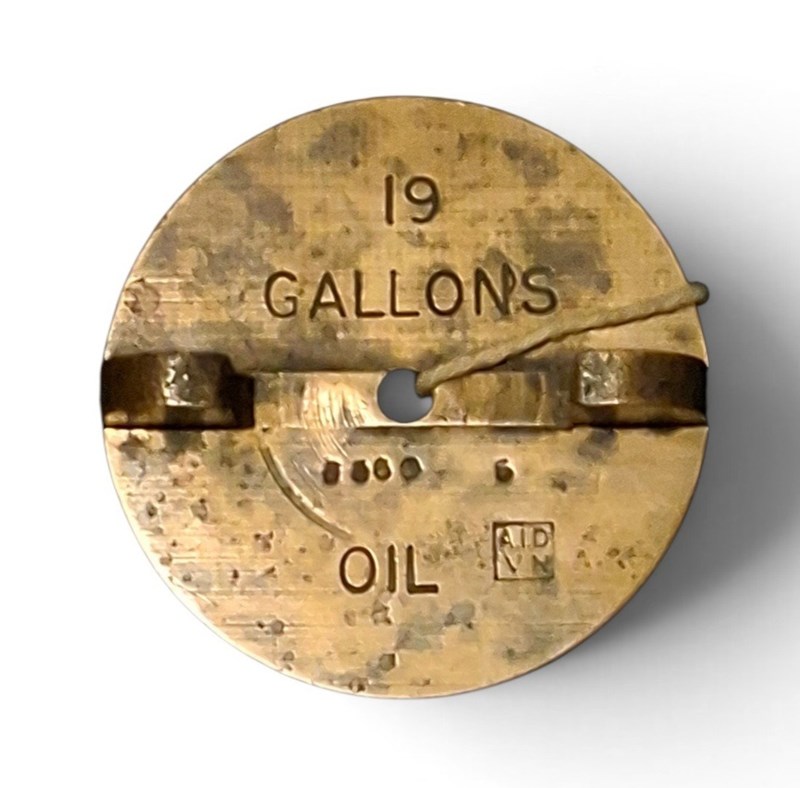
Lot 30 Alcock & Brown Oil Cap
Lot 30 in our auction on 29th September features the Alcock and Brown first non-stop transatlantic flight, in a Vickers Vimy bomber, June 15 1919, brass oil cap, salvaged from the crashed aircraft, marked 19 Gallons, 3360, A.I.D. / V.N 19 GALLONS, this indicates the exact volume capacity of the specific oil reservoir tank it sealed.