

-
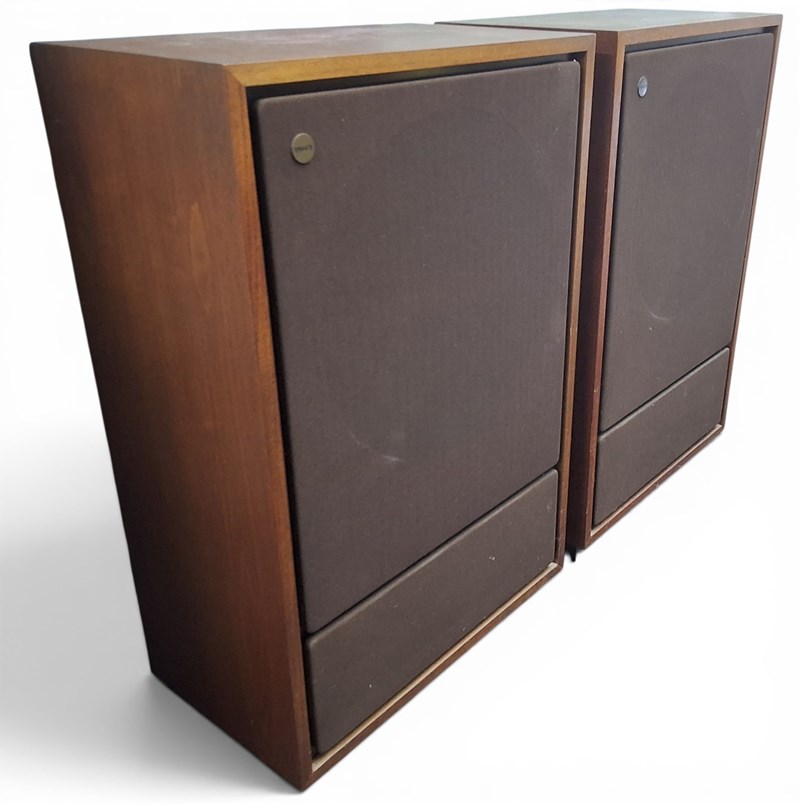
A pair Tannoy speakers sold for £1800 recently at EWB Auctions
Tannoy Speakers
Collecting Tannoy speakers is a unique passion that brings together music history, engineering, and a distinct sound. You're not just buying a brand, you're chasing a particular listening experience - open mids, coherent imaging, and that famous dual-concentric presentation that made Tannoy a benchmark for years.
So, what gets you started on this journey? For some, it's all about those early monitor models. Others prefer the later studio units. And then there are those who hunt for complete vintage cabinets, rather than loose drivers. Having a focus is key, given Tannoy's long history and the many variants out there - different cones, crossovers, impedances, and enclosure styles. Without a clear direction, you might end up with a bunch of mismatched parts that are interesting on their own but don't quite come together as a collection.
Now, condition is a huge factor in both value and enjoyment. Original drivers, intact cones, working crossovers, and unmodified cabinets - these are the things that typically make a Tannoy speaker more desirable. Knowing the history of a pair can also make a big difference. Were they used in a studio or a home system? Is there documentation of any restoration work? In the world of vintage audio, originality is often just as important as sound quality.
Restoration is part of the game, but it requires a gentle touch. Many Tannoy speakers have been around for a long time, so they might need some attention - new foam, capacitors, wiring, or cabinet joints. The best restorations are the ones that keep the speaker true to its original character while making it safe and usable. Over-restoring, on the other hand, can actually reduce the collector appeal, especially if later parts replace the originals.
Caring for your Tannoy collection involves more than just playing music. These speakers are large, heavy, and often sensitive to cabinet condition, so they need to be stored upright, away from damp, and protected from sudden temperature changes. If you've got multiple pairs, it's a good idea to keep detailed notes on serial numbers, driver types, crossover revisions, and cabinet dimensions. That way, you'll have a record that's useful for maintenance and for future resale.
The market for vintage Tannoys can be pretty active, which is both good and bad for collectors. On the one hand, there's strong interest and an established community of buyers. On the other hand, prices can spike quickly, and you've got to watch out for fake claims or mismatched components. To navigate this market, you need patience, careful comparison, and a willingness to learn the subtle differences between versions.
What makes Tannoy collecting so special is that these speakers are not just decorative pieces - they're musical objects. Many collectors buy them because they want to live with them, not just look at them. A well-preserved pair of Tannoys can be the centerpiece of an entire listening room, and for some people, that's the whole point. The ideal collection isn't the biggest one; it's the one built around knowledge, listening, and a respect for the speaker's history. And that's what makes it truly rewarding.
If you have an audio equipment collection and wish to have it valued or entered in an auction then either call us on 0114 279 6959 or email info@ewbauctions.com
-
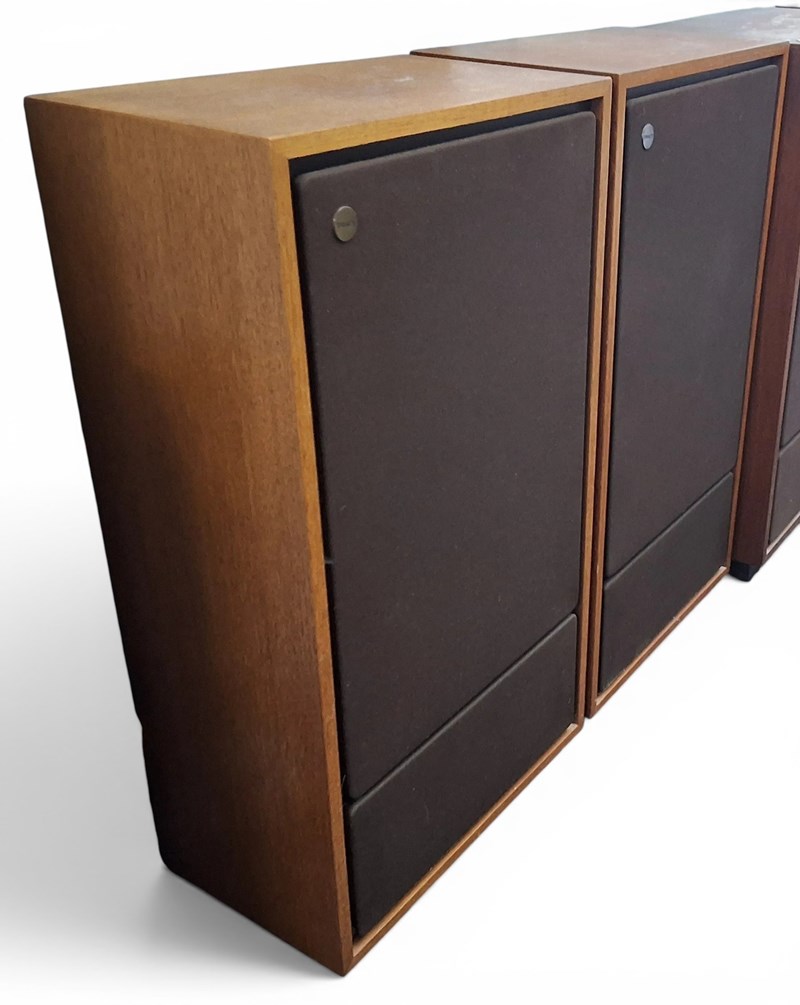
A pair of Tannoy Cheviot speakers sold for £1050 recently at EWB Auctions