

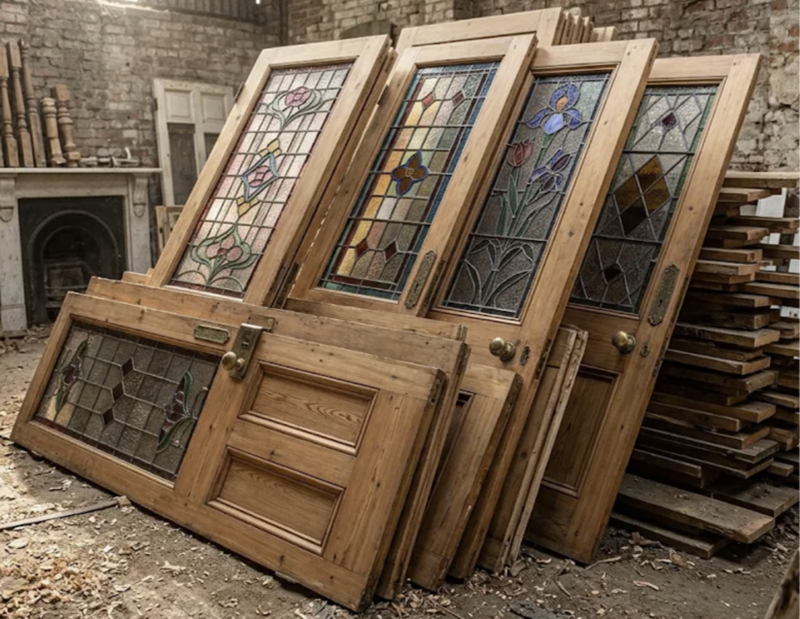
Victorian and later Doors
Victorian Pine Doors with Stained Glass Panels
Victorian pine doors with stained glass panels are among the most characterful surviving features of nineteenth- and early twentieth-century homes. Combining warm, practical timber with coloured, leaded or painted glass, they brought light, privacy and ornament into hallways, entrance porches and internal rooms. Although “Victorian” is often used loosely for reclaimed examples, the finest original doors date broadly from the mid-nineteenth century through to the Edwardian period, when stained glass remained highly fashionable in domestic architecture.
Historical context
During the Victorian era, stained glass moved from its traditional association with churches and grand public buildings into ordinary homes. The revival was closely linked with the Gothic Revival and, later, the Arts and Crafts movement, whose designers and makers reacted against industrial mass production by championing handcrafted decoration and historic craftsmanship. Figures associated with the movement, including William Morris and Edward Burne-Jones, helped establish stained glass as a desirable feature of domestic interiors.
Pine was a natural choice for door makers. It was relatively available, easy to work, stable enough for panelled construction and suitable for painting, graining, staining or varnishing. A typical Victorian door might have solid timber stiles and rails, recessed or moulded panels below, and one or more glazed openings above. The glass was often arranged as two long vertical panels, a single large panel, or a combination of upper panels and a fanlight.
Design and appearance
The most appealing Victorian pine doors balance robust joinery with delicate glazing. Many were made from straight-grained pine, later stripped of paint to reveal the honeyed colour of the timber. Others retain original painted finishes, often in deep greens, blues, reds, creams or black, which can complement the colours of the glass particularly well. Reclaimed examples frequently show evidence of repeated repainting, repairs and alterations—part of their history rather than necessarily a defect.
Stained glass panels vary greatly in complexity. Simple doors may use clear textured glass with a coloured border, while more elaborate examples incorporate hand-painted roundels, floral motifs, birds, geometric borders, etched details and bevelled glass. Popular Victorian themes included flowers, foliage, rural scenes and small birds; painted scenes in central roundels were especially effective in entrance doors, where daylight could illuminate the artwork from outside.
A common arrangement is the “margin-glazed” door, in which narrow coloured glass borders frame a central area of clear or textured glass. These designs provided privacy without completely blocking light, making them particularly suitable for front doors, vestibules and internal doors between halls and reception rooms.
Practical qualities
The enduring appeal of these doors lies in their combination of beauty and function. Stained glass diffuses daylight, creates a welcoming glow in a hallway and offers a degree of screening from the street. In an era before widespread electric lighting, this was especially valuable: a glazed front door could brighten a dark entrance hall while maintaining modesty and security.
Pine itself has practical advantages. It is light enough to hang easily, yet substantial when properly constructed, and it accepts paint and stain well. Original Victorian doors were often made from thick, well-seasoned timber, giving them a solidity that many modern lightweight replacements lack. Antique examples can therefore be suitable for both internal use and, where appropriately protected, sheltered external positions.
Restoration and care
Original stained glass should be treated as an important historic feature. Small cracks can sometimes be stabilised, but widespread breakage, buckling leadwork or loose cement usually requires a specialist stained-glass conservator. Professional restoration may involve carefully dismantling the panel, retaining sound original glass, replacing missing pieces with closely matched glass, rebuilding the lead matrix and resealing the panel.
The timber frame also needs sympathetic attention. Loose joints, damaged mouldings, rotten lower rails and failed paintwork should be repaired rather than unnecessarily replaced. Where glass is missing, a reputable studio can create a new panel in a period-appropriate style, using traditional leaded-light construction and colours sympathetic to the door and property. Encapsulation with clear protective glass can improve insulation and security, provided it does not trap moisture against the historic panel.
Why they remain desirable
Victorian pine doors with stained glass panels offer something few modern doors can replicate: a sense of craftsmanship, colour and arrival. They suit Victorian and Edwardian houses especially well, but a well-chosen antique door can also bring warmth and individuality to a later property. Whether restored, conserved or carefully reproduced, these doors remain a striking reminder of an age when even an entrance door could be both practical and beautiful.
-
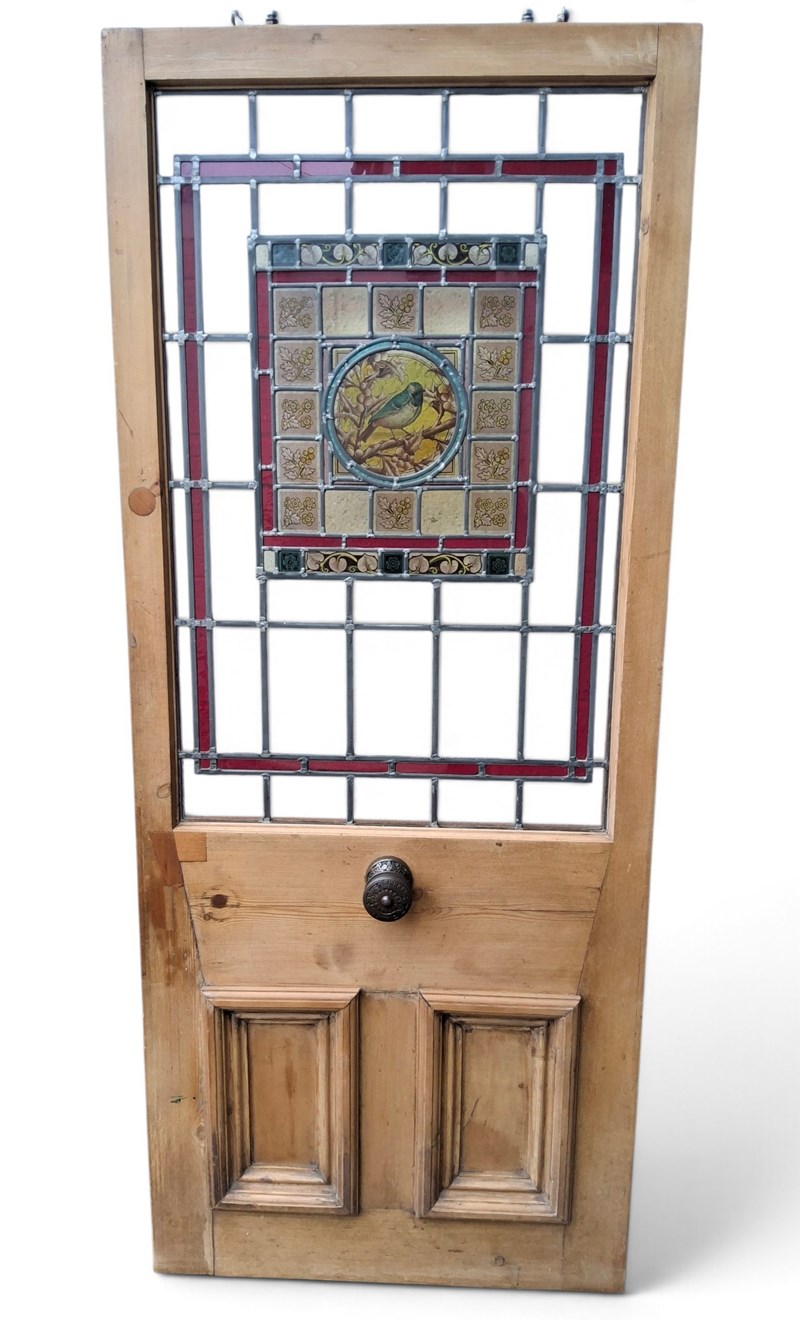
Lot 205 achieved £360 at Ellis Willis and Beckett